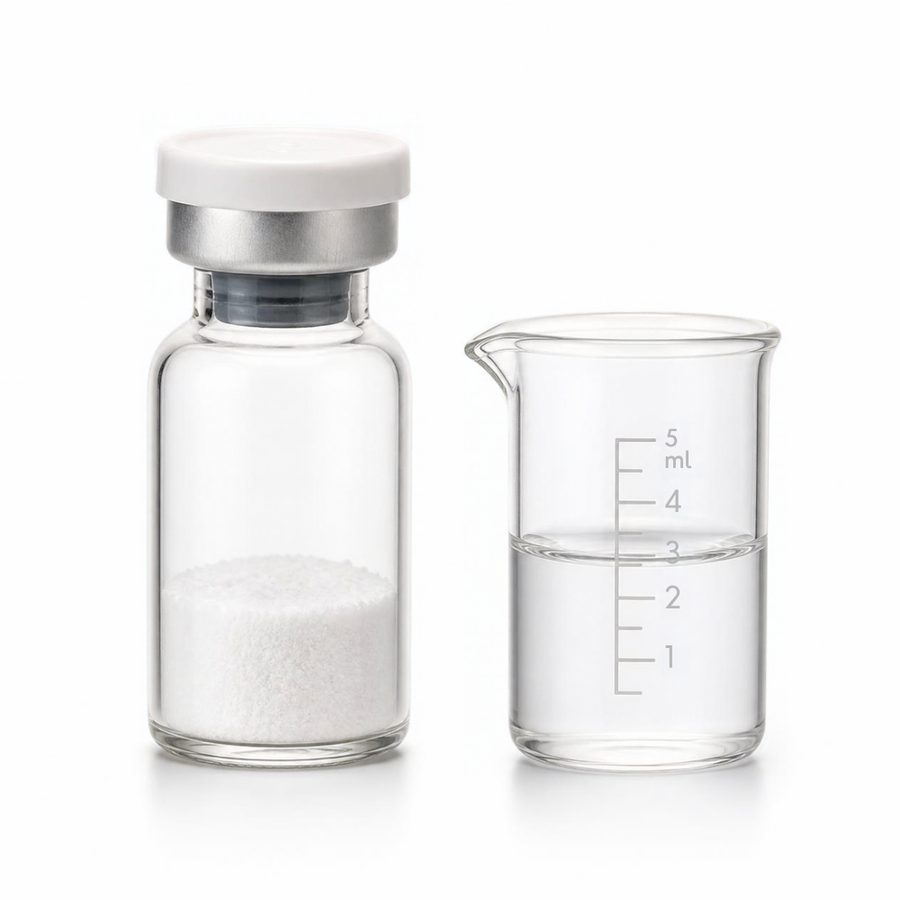
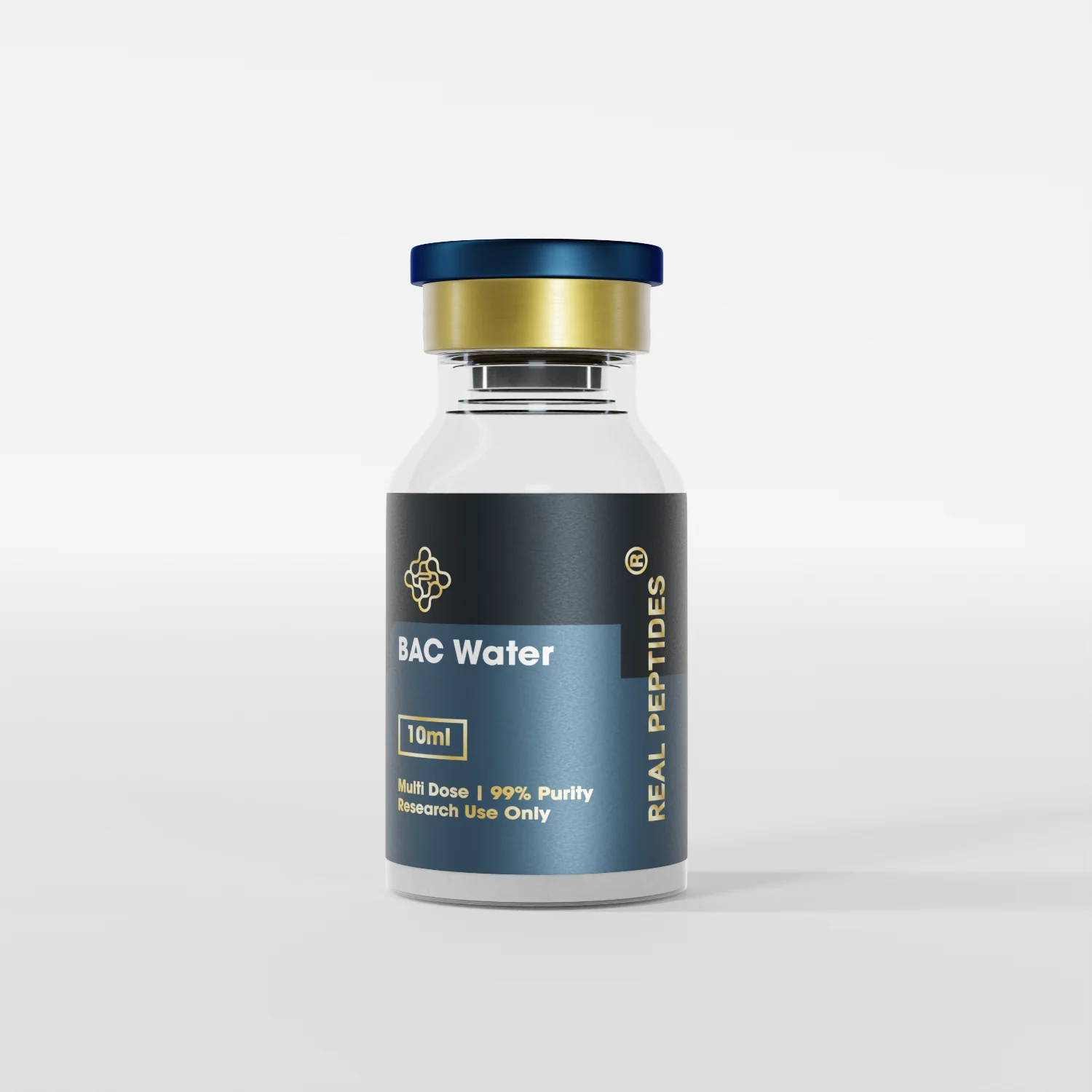
10 ml bacteriostatic water with 0.9% benzyl alcohol — USP-grade for reconstitution.
Real Peptides Bacteriostatic Water 10ml — Product Overview
$4.80
Our rating 4.5/5
Volume: 10ml / Preservative: 0.9% Benzyl Alcohol / SKU: RP-BAC10V / Use: Reconstitution
Real Peptides bacteriostatic water 10ml at $4.80. USP-grade with 0.9% benzyl alcohol. Specs and storage reviewed for reconstitution use.
USP-grade with 0.9% benzyl alcohol preservative
Only $4.80 per 10 ml vial
Multi-use vial with crimped aluminum seal
Single 10 ml size only
Sold separately from peptide orders
Key Features
- 10ml volume per vial
- 0.9% benzyl alcohol as bacteriostatic agent
- USP-grade water
- Glass vial with crimped aluminum seal
- Priced at $4.80
- SKU: RP-BAC10V
- Standard reconstitution solvent for lyophilized peptides
What's Inside
There are 10 ml of sterile water with 0.9% benzyl alcohol in the vial. USP-grade means that the product is manufactured according to the specifications of the U.S. Pharmacopeia regarding its purity, composition, and quality of products. Benzyl alcohol at this concentration is sufficient to counteract the growth of microorganisms in the vial between uses without affecting most of the peptide tests.
The glass vial design follows the common practice for bacteriostatic water products. It uses inert glass that does not leach chemicals into the water, unlike some plastic containers. The aluminum crimp seal secures a rubber stopper in position, which allows for needle access without losing the containment of the vial.
There are no active research compounds in the product, so it is a pure solvent and diluent, used in the process of rehydrating dry peptides, proteins, or other research substances.
How to Store and Handle
Keep the unopened container stored at room temperature and out of reach of direct sunlight. Bacteriostatic water does not have to be put in the refrigerator. After breaking the seal on the container, the benzyl alcohol will allow for multiple extractions while keeping the liquid sterile, so long as it is used within 28 days.
Before inserting a needle into a vial, the rubber stopper needs to be cleaned properly using isopropyl alcohol. It’s necessary to use a new syringe for each draw in order to minimize contamination. Also, one must avoid touching the rubber stopper afterwards.
For reconstituting peptide, take the required volume of bacteriostatic water and carefully inject it against the inner wall of the vial containing the peptide. Do not pour the water directly onto the lyophilized cake as that may cause it to clump together. Allow it to dissolve on its own but swirl lightly if it is required. Do not shake the vial at any point.
If there is any particulate matter, the cloudiness of the water, or discoloration of the water, throw the bacteriostatic water vial away as these indicate contamination.
Check price at Real Peptides
Sold and shipped by Real Peptides. Price checked October 2026. We may earn a commission.
Real Peptides Bacteriostatic Water Overview
Bacteriostatic Water from Real Peptides is a 10ml bottle of sterile water conforming to USP standards with the addition of 0.9% of benzyl alcohol, which acts as a preservative. The product has SKU RP-BAC10V and costs $4.80. It is the most common solvent used for reconstituting lyophilized peptides in laboratories and is an essential part of supplies for every lab performing work with freeze-dried substances.
Bacteriostatic water has benzyl alcohol, the antibiotic substance that allows for limiting the growth of bacteria and using the vial several times during a longer period. Unlike regular sterile water, bacteriostatic water has a preservative, and an ideal use involves no more than one session. Real Peptides puts the product in a glass container secured with an aluminum cap.
Our Verdict
The price of $4.80 for a 10ml vial of Real Peptides Bacteriostatic Water makes it an affordable option for a product that meets USP requirements. The product is contained in glass vials that are fitted with aluminum caps, which are superior to plastic containers, and contain 0.9% of benzyl alcohol, which is considered to be the best option for bacteriostatic applications.
This is not a merchandise that requires thorough evaluation. Bacteriostatic water is a commodity product and the essential factors here are quality grade, packaging safety, and price. Real Peptides satisfies all the listed criteria. As we think that this product makes sense fors the scientists ordering their peptides from the same company because of the consideration of shipping expenses and availability of compatible product.
The 10ml volume is more than enough to rehydrate a number of peptide containers depending on the dilution volume chosen. With a standard 1ml rehydration per container, one bottle of bacteriostatic water can rehydrate about 10 containers. It is advisable to always keep a container on hand when you store freeze dried peptides in the freezer.
Our rating
4.5out of 5
Rated by the BPC-157 Dosage editorial team, October 2026
10 ml bacteriostatic water with 0.9% benzyl alcohol — USP-grade for reconstitution.
USP-grade with 0.9% benzyl alcohol preservative
Only $4.80 per 10 ml vial
Multi-use vial with crimped aluminum seal
Single 10 ml size only
Sold separately from peptide orders
FAQ, Bacteriostatic Water
What is bacteriostatic water used for?
It is possible to use bacteriostatic water for the purpose of dissolving freeze-dried peptides and proteins and other dry substances to make solution. The 0.9% of benzyl alcohol inhibits bacterial growth, so the vial can be used multiple times.
How long does it last after opening?
It is recommended that opened bacteriostatic water vials be discarded after 28 days. Although the benzyl alcohol agent inhibits bacterial growth, it does not assure indefinite sterility. It is essential to disinfect the vial's rubber lid with alcohol and use sterile syringes to ensure a prolonged lifecycle of bacteriostatic water.
Can you use regular sterile water instead?
Uncomplicated sterilized water may be used for single draws where the solution will be used in its entirety without delay. However, since there is no bacteriostatic agent present, opened sterilized water can be easily contaminated with microorganisms. Bacteriostatic water is the better option for those multi-dose containers that will be drawn from over a period of days or weeks.
How much water do you add to a peptide vial?
The reconstitution volume is determined by the amount of peptide and the required working concentration. Typical volumes for a 5mg or 10mg peptide vial are between 1 and 2ml. Adding 1ml to a 10mg vial corresponds to a concentration of 10mg/ml. Adding 2ml gives you 5mg/ml. It is important always to do calculations based on your required concentration and the amount of peptide mentioned on the vial.