BPC-157 Reconstitution — Step-by-Step Math
Step-by-step BPC-157 reconstitution guide. Bacteriostatic water volumes, concentration math, and syringe reading explained with worked examples.
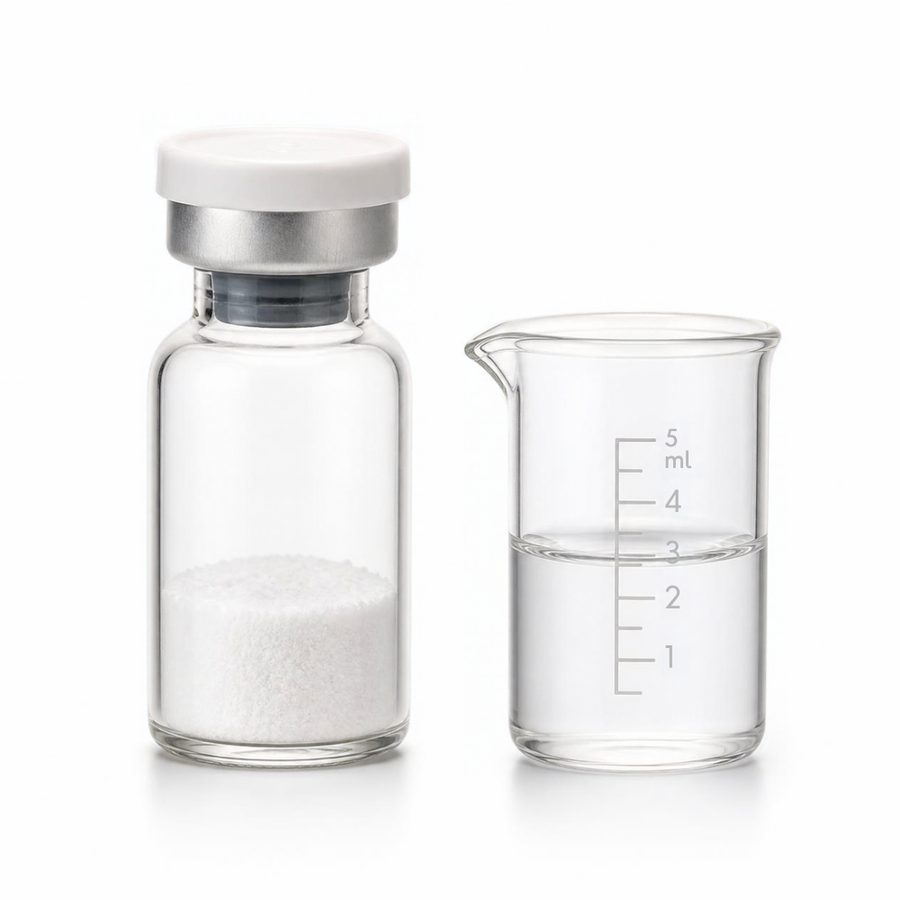
BPC-157 comes in a lyophilized form, which can be either a freeze-dried cake or powder located at the bottom of a vial. To draw it into a syringe, you have to add bacteriostatic water to dissolve it. This process is also called reconstitution, as it is a straightforward task requiring basic math as well as some equipment. In the following paragraphs, we will provide guidance on how to carry out this operation along with calculation methods and tips on storage.
BPC-157 Reconstitution - The Arithmetic Behind It
What You Need Before Starting
Gather these items before you start:
- One vial of lyophilized BPC-157 with a known milligram amount (commonly 5 mg or 10 mg)
- Bacteriostatic water (0.9% benzyl alcohol, USP-grade). Real Peptides sells a 10 ml vial for $4.80.
- Alcohol swabs for sterilizing vial tops
- A syringe for transferring water (a 1 ml or 3 ml syringe with a needle works for this step)
- Insulin syringes (100-unit, 0.5 ml or 1 ml) for measuring the reconstituted solution later
Why Bacteriostatic Water and Not Saline
Bacteriostatic water has the content of 0.9% of benzyl alcohol, which prevents bacteria from growing in the container. Normal saline (0.9% NaCl) and sterile water for injection do not contain preservatives. If you want to use the container many times for a few days or weeks, then benzyl alcohol from bacteriostatic water is useful for preventing any contamination when using it next time. Technically speaking, in single-use cases sterile water can be used, but bacteriostatic water is default for reconstitution in research. There are different opinions that recommend not using bacteriostatic water for children, but it does not relate to peptide reconstitution.
Step-by-Step Reconstitution Process
- Swab the vial tops Wipe the rubber stoppers on both the peptide vial and the bacteriostatic water vial with alcohol swabs. Let the alcohol evaporate for a few seconds.
- Draw bacteriostatic water Using a syringe, pull your chosen volume of water from the bacteriostatic water vial. Common volumes are 1 ml, 2 ml, or 5 ml depending on the concentration you want.
- Inject water into the peptide vial Insert the needle through the rubber stopper of the BPC-157 vial. Angle the needle so the water runs down the inside wall of the glass, not directly onto the powder cake. Push the plunger slowly.
- Dissolve the powder Remove the syringe. Gently roll the vial between your palms or tilt it side to side until the powder fully dissolves into a clear solution. Do not shake or vortex.
- Label and store Write the reconstitution date, peptide name, and concentration on the vial or a piece of tape. Store the vial in a refrigerator at 2 to 8 degrees Celsius.
Adding Water to the Vial Without Agitation
The reason why you pour water down the side of the vial instead of spraying it onto the powder is due to the fact that spraying can disturb the cake in a manner that encases air bubbles or induces foaming. Peptide solutions may foam when shaken; this foam complicates measuring the amount of liquid to be drawn at a later stage. Slow dissolution will help the peptide to remain undamaged and will ensure that the solution is clear. If the powder has not been dissolved after a minute or two of gentle shaking, place the vial in the fridge for between 10-15 minutes and try again. Most of the lyophilized BPC-157 dissolves very quickly.
Reading the Final Concentration
After dissolving, your inputs determine concentration, including total peptide material content (in mg or mcg) and water total amount (in ml). The equation is simple.
Concentration (mcg/ml) = Total peptide (mcg) / Water volume (ml)
In case of a 5 mg bottle which contains 2 ml of water, the calculation will be the following: 5,000 mcg divided by 2 ml equals 2,500 mcg/ml. In the case of 10 mg bottle filled with 2 ml, the calculation goes as follows: 10,000 mcg divided by 2 ml is equal to 5,000 mcg/ml. Each following reading you will get through a syringe will be dependent on the concentration you have just made. So make sure to double check all of your entries and calculations.
Concentration Reference Table
| Vial (mg) | Water (ml) | Concentration (mcg/ml) | mcg per 0.1 ml (10 IU) | mcg per 0.01 ml (1 IU) |
|---|---|---|---|---|
| 5 | 1 | 5,000 | 500 | 50 |
| 5 | 1.5 | 3,333 | 333 | 33.3 |
| 5 | 2 | 2,500 | 250 | 25 |
| 5 | 2.5 | 2,000 | 200 | 20 |
| 5 | 5 | 1,000 | 100 | 10 |
| 10 | 1 | 10,000 | 1,000 | 100 |
| 10 | 2 | 5,000 | 500 | 50 |
| 10 | 3 | 3,333 | 333 | 33.3 |
| 10 | 5 | 2,000 | 200 | 20 |
| 10 | 10 | 1,000 | 100 | 10 |
To get a different version of this table with the option of modifying any size of the vial and how much water can be used, please check our website reconstitution calculator.
Storage After Reconstitution
Temperature and Light Requirements
It is recommended to keep stored BPC-157 in the fridge under conditions of 2 to 8 °C (36 to 46 °F). You should always keep the bottles in an upright position and away from bright lights. The peptide is sensitive to heat, UV light, and frequent temperature changes, which can alter its integrity. Do not freeze the solution because ice can ruin the peptide structure. Some investigators cover the vials with aluminum foil to protect them from light, but the inside of a closed refrigerator is usually dark enough to avoid any damage.
How Long a Reconstituted Vial Lasts
There has been no manufacturer-released stability study for BPC-157 reconstituted by research peptide vendors. According to the general information about peptides, their reconstituted version needs to be kept between 2-8 degrees Celsius and should stay potent for a 3-4 weeks timeframe. However, some cautious sources claim it should only be effective for 2 weeks. After that period peptides might degrade, oxidate, and/or get contaminated by bacteria. It would be wise to label each vial with reconstitution date and throw away cloudy or discolored solutions with possible sediment particles.
Factors that reduce shelf life include:
- Frequent needle punctures through the rubber stopper, which can introduce contaminants
- Leaving the vial at room temperature for extended periods
- Using sterile water instead of bacteriostatic water (no preservative means no bacterial inhibition)
- Contaminated syringes or needles touching the stopper
Factors that extend shelf life include:
- Using bacteriostatic water with 0.9% benzyl alcohol
- Consistent refrigeration without temperature swings
- Minimizing the number of times you pierce the stopper
- Swabbing the stopper with alcohol before every draw
FAQ - BPC-157 Reconstitution
Can you shake the vial?
This is incorrect; shaking the vial only introduces air into the solution helping the peptide to lose structure at the air-liquid interface. Instead, please roll gently the vial in the palms of your hands or tilt back and forth. The peptide powder should dissolve in a couple of minutes. If not, put it in a refrigerator for 10 minutes and try rolling again.
What happens if you use too much water?
Diluting the solution is the result of putting in more water than previously calculated. The volume of peptide in the vial will not change. For example, if you aimed for 2 ml of water, and instead put in 3 ml water, the concentration would go down from 2,500 mcg/ml (for a vial of 5 mg) to 1,667 mcg/ml. More volume will have to be drawn in order to use the same amount of peptide each time. There is no danger, it is just an inconvenience. You can recalculate the concentration using the amount of water you actually put in.
How long does reconstituted BPC-157 last?
Peptide handling references give general advice about usability at the range of around three to four weeks for storage in bacteriostatic water at 2 to 8 Celsius degrees of temperature. There is no published manufacturer stability study for BPC-157 supplied by research peptide suppliers. If the solution appears cloudy, contains particles, or has been kept beyond 4 weeks, throw away the solution. When in doubt, use a new vial.
Keep reading
BPC-157 Oral vs Injection — Routes Compared
BPC-157 oral vs injection routes compared from published research. Bioavailability, study doses, and what each route was tested for in animals.
BPC-157 Half Life — What Research Shows
BPC-157 half life data from available research. What limited pharmacokinetic studies suggest and why precise human half life is still unknown.
BPC-157 Dosage in Units — mcg to IU Conversion
BPC-157 dosage in units explained. Convert mcg to syringe units with a known concentration using step-by-step math and reference tables.
Compare the current picks
Prices, sizes and ratings side by side, updated when the merchant pages change.
Compare sources