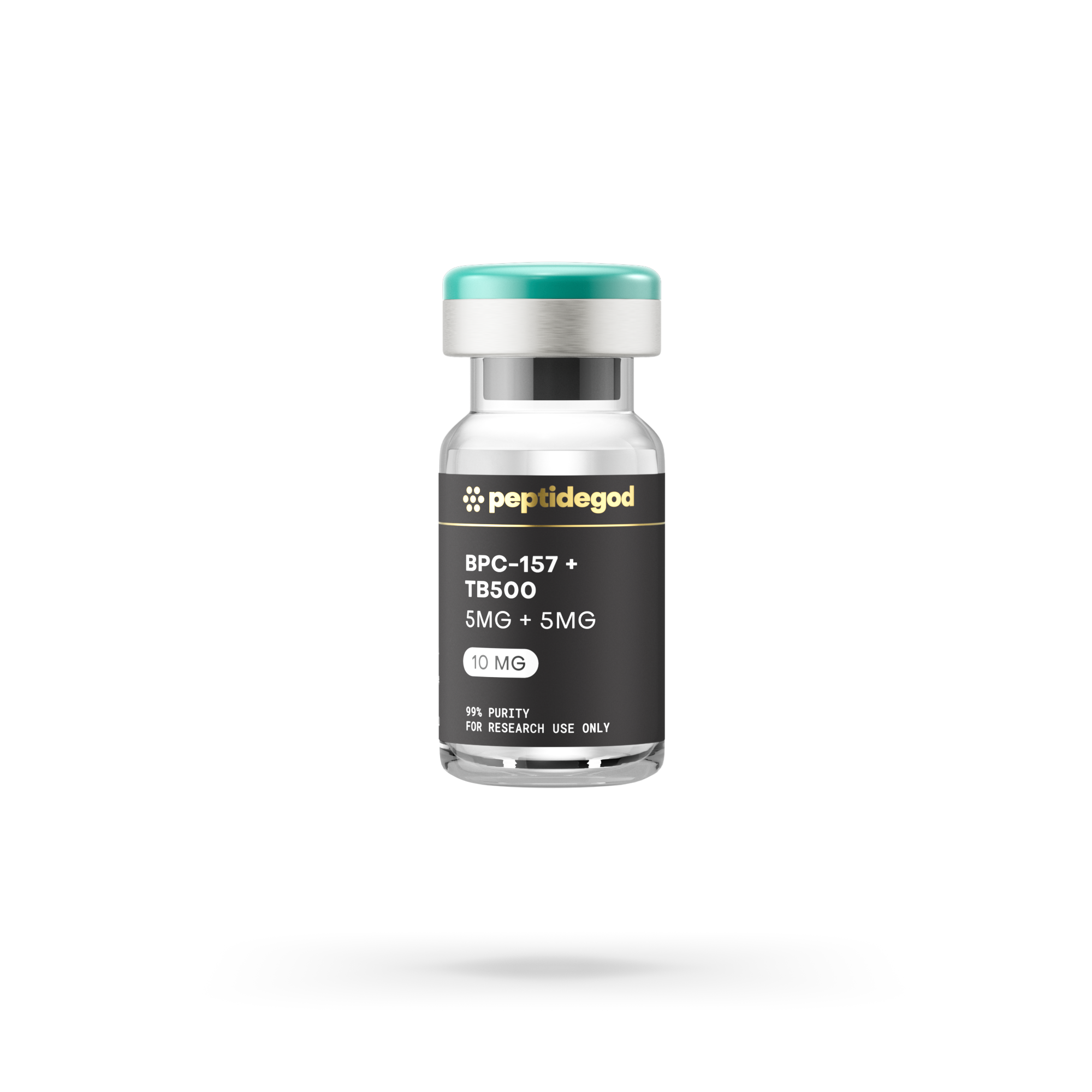
Combined BPC-157 and TB-500 blend vial — single reconstitution for stack protocols.
PeptideGod BPC-157 + TB500 Blend — Product Overview
PeptideGod BPC-157 TB500 blend vial at $59.95. Blend specs, reconstitution notes, and what the product label tells you. Independent review.
Key Features
- Combined BPC-157 and TB500 in a single lyophilized vial
- Priced at $59.95 per vial
- Currently listed as in stock
- Individual peptide amounts per vial are not specified on the product page
- No COA linked on the product listing
- Sold through peptidegod.com
What's Inside
In the vial there is a mixture of peptides in a freeze-dried state. The peptide BPC-157 consists of 15 amino acids and is known for its use in the research on the protection of the stomach lining, while TB500 is an artificial version of the thymic hormone Thymosin Beta-4, which helps in regulating actin filaments when it comes to tissue healing functions.
The PeptideGod product page does not reveal the individual milligram amounts of the peptides in the blend. This represents a major limitation. Without this information, it is impossible for researchers to determine the working concentration of each peptide after reconstituting it. We find this to be a disadvantage in any application that uses the product in laboratories, where exact dosage is crucial.
How to Store and Handle
To ensure the maximum shelf life of the product, the unconstituted vial should be stored at -20 degrees Celsius. For short-term refrigeration the vial can be stored at 2 to 8 degrees Celsius if the vial is going to be used within a few weeks. The product should also be kept away from direct sunlight and excessive heat.
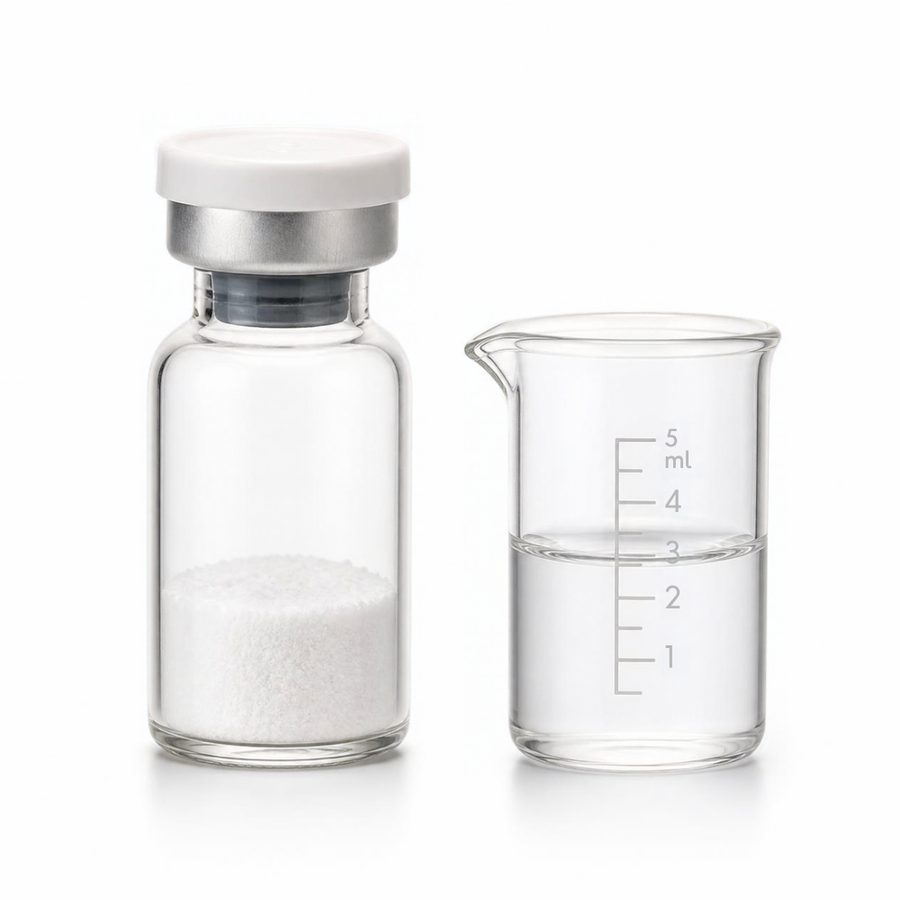
To reconstitute the mixture, it is necessary to slowly add the bacteriostatic water along the vial sides. The powder must dissolve without shaking; however, it is acceptable to swirl the mixture. The dissolved mixture should be kept in the refrigerator and used within 30 days. It is important to observe all aseptic procedures and to wear sterilized gloves.
As this is a mixture, the volume of reconstitution determines the concentration of the two peptides at once. After mixing the vial, it’s impossible to alter the ratio of BPC-157 to TB500.
PeptideGod BPC-157 + TB500 Overview
PeptideGod has a combination vial of BPC-157 and TB500 in the form of freeze-dried powder, which sells for $59.95. The combination vial is perfect for anyone who wants to study both peptides at once without having to spend additional money on multiple purchases. BPC-157 is a synthetic peptide made up of a 15-amino acid segment of a protein found in gastric juice. Meanwhile, TB500 is a synthetic version of Thymosin Beta-4, a 43-amino acid peptide responsible for various functions related to cell migration and healing processes.
The use of the blend format by peptide vendors is now becoming widespread, but it does introduce issues relating to dose calculation and quality assurance. At the time of writing, the product is available on peptidegod.com.
BPC-157 and TB500 are not approved for human use. The only intention of this review of the products is to provide research reference only.
Our Verdict
The two-peptide mix being in one container is the main highlight. The cost of the mixture is $59.95. This is lesser than buying both of the products, PeptideGod’s BPC-157 ($34.95) and TB500 ($35.00), separately. The total cost of buying the two separate products comes to $69.95, thereby saving around $10.
Nevertheless, the absence of any specific amounts of peptide presented in the study is a real worry. The researchers must know how many milligrams of the respective peptide they are using. Without such information, it is impossible to design a proper experiment. The problem is worsened due to the absence of any accompanying COA, as there is no confirmation of identity or purity by some other party.
The use of blends in some situations seems beneficial; however, this only applies if the manufacturer provides full information on the vial contents. If PeptideGod makes this information available in any other way or if it is provided upon request, it becomes reasonable for the product to be consumed. Until that time, it is advisable for scientists, who use documented peptide amounts, to order separate vials from companies that give mg amounts and COA information.
Our rating
Combined BPC-157 and TB-500 blend vial — single reconstitution for stack protocols.
FAQ, PeptideGod BPC-157 + TB500
How much of each peptide is in the blend?
BPC-157 and TB500 are not mentioned on the PeptideGod official page regarding their amount in milligrams, neither do we have access to the ratio of these two compounds. It is advisable to contact the vendor directly if you want to make your research planning.
Is the blend cheaper than buying separately?
That’s right. The mix comes at a price point of $59.95, while the similar prices of each substance BPC-157 ($34.95) and TB500 ($35.00) when purchased separately total $69.95, which results in savings of approximately $10. It is necessary to point out that it is impossible to make a proper cost-per-milligram comparison without knowing the precise milligram dosages of the blend.
How do you reconstitute a blend vial?
Inject slowly the bacteriostatic water along the sides of the vial. Allow the lyophilized powder to dissolve on its own or stir carefully but do not shake. The amount of water used for dissolving will decide the concentration of the peptide powders. Once the mixture is made, store in the refrigerator and observe proper sterile techniques.
Is this blend studied in any published research?
Research into the individual effects of BPC-157 and TB500 has been done, however, there are very few studies analyzing the outcomes when both ingredients are combined into a single solution. Most of the studies published so far have focused on individual molecules. It is more common for scientists studying the combined effect to do the injection separately and in the precise amount in order to have control over the experiment.