BPC-157 Injection Dosage Protocol — Study Evidence
BPC-157 injection dosage data from published animal studies. Subcutaneous and IP routes, doses per kg, and why no human injection protocol exists.
Injectable methods make up most of the BPC-157 studies available in the literature. In the studies, the rats got the peptide either subcutaneously, intraperitoneally, or via local injections into the injured areas. This information has been assembled into this useful table, allowing to check the dosages, routes of administration, and duration of injections used in the studies.
BPC-157 Injection Dosage - Routes Used in Animal Research
Subcutaneous Injection Doses in Rat Tendon and Muscle Models
Subcutaneous (SC) injection places the peptide just beneath the skin. In musculoskeletal BPC-157 studies, researchers often injected near the injury site. Chang et al. (2011) used local injection adjacent to transected medial collateral ligaments in rats, delivering BPC-157 directly to the tissue of interest (PMID 21030672). Cerovecki et al. (2010) administered 10 mcg/kg IP and also described local cream and per-oral delivery in their rat MCL healing model (PMID 20225319).
The rationale for local injection is quite clear: delivering the peptide near the site of injury. However, whether this is important from a pharmacological perspective or whether systemic distribution of the peptide from any injection site reaches the target tissue has not been formally tested in most studies.
Intraperitoneal Injection in GI and CNS Studies
Among various methods used in BPC-157 studies, intraperitoneal (IP) injection was the preferred approach. This method is preferred in rodent pharmacology because it provides quick systemic absorption and is easy to use on small animals. Sikiric et al. (1993) used IP injection in anti-ulcer experiments (PMID 8298609). Tkalcevic et al. (2007) provided 10 mcg/kg of the drug through IP injection in anti-inflammatory studies (PMID 17628536).
One cannot use IP injection for peptide delivery in human medicine and so there is a translation gap that cannot be reconciled based on existing data. For example, humans that receive injectable peptides will use a subcutaneous route that exhibits diverse kinetics of absorption compared to IP administration in rodents.
Dose Ranges Reported Across Published Papers
| Study | Species | Route | Dose | Duration | Outcome Measured | PMID |
|---|---|---|---|---|---|---|
| Staresinic et al. 2003 | Rat | IP | 10 mcg/kg | 14 days | Achilles tendon healing | 14554208 |
| Cerovecki et al. 2010 | Rat | IP | 10 mcg/kg and 10 ng/kg | 14 days | MCL healing biomechanics | 20225319 |
| Brcic et al. 2009 | Rat | IP | 10 mcg/kg daily | Variable | Muscle/tendon angiogenesis | 20388964 |
| Chang et al. 2011 | Rat | Local injection | Not specified per kg (local) | Variable | MCL healing | 21030672 |
| Sikiric et al. 1993 | Rat | IP | Multiple doses | Variable | Anti-ulcer activity | 8298609 |
| Tkalcevic et al. 2007 | Rat | IP | 10 mcg/kg | Variable | Anti-inflammatory markers | 17628536 |
| Novinscak et al. 2008 | Rat | IP | 10 mcg/kg and 10 ng/kg | Variable | Muscle crush healing | 18668315 |
| Sebecic et al. 1999 | Rabbit | IP | 10 mcg/kg | Variable | Bone defect healing | 10071911 |
Why 10 mcg/kg and 10 ng/kg Appear Most Often
The prevalence of the two dosage levels is remarkable. Almost all of the studies published used 10 mcg/kg, 10 ng/kg, or sometimes both. This is not because the studies showed these doses as optimal. Rather, these two doses were decided upon early on by the Sikiric group in Zagreb and continued to be used by the same group and collaborators in their later studies.
This is a limitation. In other words, there is no definition of a minimum effective dose, a maximum tolerated dose, or a dose-response curve for injectable BPC-157 in the published literature. We have two pieces of information from many experiments rather than a systematic dose escalation.
Single-Dose vs Repeated-Dose Protocols in the Literature
The majority of the injection studies are designed to admit repeated use every day for a week to two weeks. Very few studies analyze the effect of administration undertaken only once, while most of the published information is based on the daily dose of IP injections during the period from one to two weeks. As a result, as of now, the literature reveals more insight into the nature of the effects of repeated administration than into the effects of an IP injection undertaken only once.
Converting Study Doses - The Math People Attempt
Allometric Scaling and Its Limitations
Allometric scaling is a technique for converting doses between different creatures based on their surface area. The FDA recommends using a conversion factor of about 6.2 to determine human equivalent doses from doses used on rats. According to this formula, a dose of 10 mcg/kg, given to a rat, would correspond to 1.6 mcg/kg, which is approximately equivalent to 112 mcg for a person weighing 70 kg.
This mathematical solution seems easy to grasp. The fact is that allometric scaling assumes similar drug kinetics, distribution in tissues, and receptor responsiveness across species. However, none of these assumptions have been proven to be true for BPC-157. We choose to present the calculations here as the readers might see them in some other source while keeping their mind open regarding this method.
mcg to Syringe Units With a Known Concentration
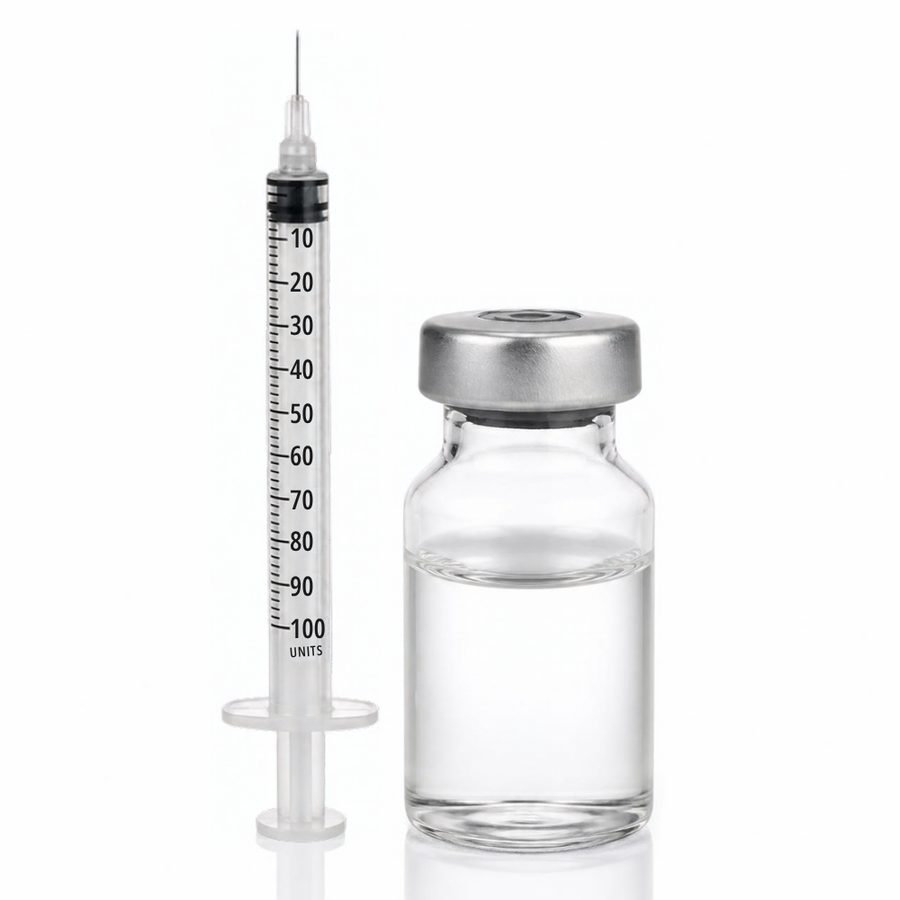
If BPC-157 has been mixed with known amount of bacteriostatic water, then it is easier to find volume per dosage. For instance, if we reconstitute 5 mg of the powder in 2 mL of solution, we get a concentration of 2500 mcg/mL which corresponds to 25 mcg per unit on an insulin syringe (1 unit = 0.01 mL). Our reconstitution calculator does this process for us automatically.
The problem is not in the calculation itself. The problem is that the dose being calculated as a target has not been validated in humans. The correct mathematical calculation of concentration applied to an unvalidated dose will still yield an unvalidated result.
What Injection Data Does Not Tell Us
No Human PK or Safety Trial Published
Until this point, there has not been any published report in peer-reviewed journals regarding Phase I pharmacokinetics and safety study of injectable BPC-157 in humans. Accordingly, all parameters such as half-life, clearance rate, volume of distribution, and maximum tolerated dose cannot be found for injectable BPC-157 in humans via any injection route.
Sikiric et al. (2010) noted the absence of formal toxicity findings in animal studies and reported that no LD50 had been established (PMID 20166993). However, the absence of observed toxicity in rats at tested doses is not equivalent to established safety in humans.
Injection-Site Considerations Are Unstudied in Humans
No investigation has ever been conducted on local adverse effects, risk of forming sterile abscesses, and discomfort resulting from the administration of BPC-157 through the subcutaneous route in humans. Commercial products containing BPC-157 have variable levels of purity and contamination with endotoxins, and there is no regulatory requirement for those products to be manufactured according to the standards of pharmaceutical quality in most countries. All of these practical safety issues exist outside of the scientific literature.
FAQ - BPC-157 Injection
What injection routes did researchers use?
The majority of BPC-157 injection studies that were published have been carried out using a technique known as the intraperitoneal injection technique in rats. Some studies in musculoskeletal fields only used local injection techniques. The intraperitoneal injections are only done in animals as such injections cannot be used in humans. The subcutaneous route which is relevant to humans has been rarely seen in BPC-157 studies published.
Is there a standard BPC-157 injection protocol?
No. There is no standardized injection regimen for BPC-157 in humans. The standard protocol used in rats was 10 mcg/kg IP once a day for 7 to 14 days but this was a standard used by one research group only, hence not clinically proven.
How do you convert mcg/kg to syringe units?
If you know the concentration of your reconstituted solution (mcg per mL), divide your target dose in mcg by the concentration in mcg per mL to get the volume in mL. Then multiply by 100 to convert to insulin syringe units. For example, a 250 mcg dose from a 2500 mcg/mL solution requires 0.1 mL, which equals 10 units on an insulin syringe. Our reconstitution calculator handles this arithmetic.
Are there published human injection studies?
There have been no controlled human injection studies on BPC-157 published in any journal indexed in PubMed. All the available data on injection dosages is based on studies in rodents. Any information regarding the human dosage available online comes from anecdotal data, extrapolations, and vendors’ advertisements on the product; there is no clinical trial data available.
No regulatory authority has authorized BPC-157 for human consumption. It is available only for laboratory research. There are no regulated data regarding its safety and efficacy for humans.
Compare the current picks
Prices, sizes and ratings side by side, updated when the merchant pages change.
Compare sources