BPC-157 Protocol for Beginners — Research Overview
BPC-157 protocol basics explained from published studies. What beginners should know about research data, reconstitution, and why no starter dose exists.
The search for "BPC-157 protocol" brings back forums, YouTube videos, vendor guides, with step-by-step protocols which include the amounts of micrograms. However, none of these protocols have been taken from medically published literature. In this article, we separate the real literature and the information that can be found on the internet.
BPC-157 Protocol - What Beginners Actually Need to Know
Why "Beginner Protocol" Does Not Exist in the Literature
There hasn't been any existing research that has aimed a protocol for use with humans, especially a stripped down one for just those new to peptides. 'Beginner dose' assumes a starting dose that has been validated as safe. There has been no testing of BPC-157 on humans.
Whenever we look at online protocol guides, they seem to be getting their numbers from two sources, namely the dosing data from the rodent studies and the anecdotal accounts of those who have actually tested the substance. In actual fact, neither source is considered clinical evidence. True beginner protocols for a therapeutic agent require the Phase I dose escalation trials to be conducted with living volunteers, which, unfortunately, is not the case with BPC-157.
What Published Research Used Instead
The pattern of rodent experiments has always remained unchanged. The dosages, almost always 10 mcg/kg or 10 ng/kg body weight, are chosen first followed by the method of administration, which is almost always the intraperitoneal route. The dosages are then given continuously for some time period ranging from 7 to 14 days. The experiment is conducted to confirm the hypothesis if healing occurs or tissue protection takes place, rather than to develop a therapeutic regimen for humans.
| Study | Species | Dose | Route | Duration | Purpose | PMID |
|---|---|---|---|---|---|---|
| Staresinic et al. 2003 | Rat | 10 mcg/kg | IP | 14 days | Achilles tendon healing | 14554208 |
| Sikiric et al. 1999 | Rat | 10 mcg/kg | PO and IP | Variable | Gastric cytoprotection | 9920181 |
| Brcic et al. 2009 | Rat | 10 mcg/kg daily | IP | Variable | Muscle crush repair | 20388964 |
| Cerovecki et al. 2010 | Rat | 10 mcg/kg, 10 ng/kg | IP | 14 days | MCL healing biomechanics | 20225319 |
| Tkalcevic et al. 2007 | Rat | 10 mcg/kg | IP | Variable | Anti-inflammatory activity | 17628536 |
Understanding the Research Context
Animal Models vs Human Application
Each dosage of BPC-157 mentioned in the literature has been derived from tests done on either rats or mice. The respective animals weighed between 150 and 350 grams at the time, and the peptide used for injections was in accordance with specifications provided by the researchers and has been manufacturing according to specifications required for pharmaceutical-grade preparations. The factors analyzed in the studies included tensile strength of tendons, the size of stomach lesions, and various inflammation biomarkers in tissue samples taken after the rodents were euthanized.
One cannot compare the process of someone purchasing a vial over the Internet and administering the substance on himself or herself to this specific protocol. The gap between "research conducted in laboratories" and "what a person should do in his or her home" cannot be reconciled through simple calculations of dosage. Human clinical studies are required.
What "Research Use Only" Means on the Label
BPC-157 products are marked with this label since the substance has not been sanctioned for public use with respect to FDA, EMA, or any other regulating agencies. The label is not a marketing decision. It represents the current legal situation regarding a compound that has never gone through clinical trials for the purposes of human use in therapeutics. We would like to put an accent on this because the label is generally misconstrued as some kind of formality, whereas in reality it states the factual side of the subject.
Reconstitution Basics for First-Time Handlers
Equipment List - Vial, Bacteriostatic Water, Syringe
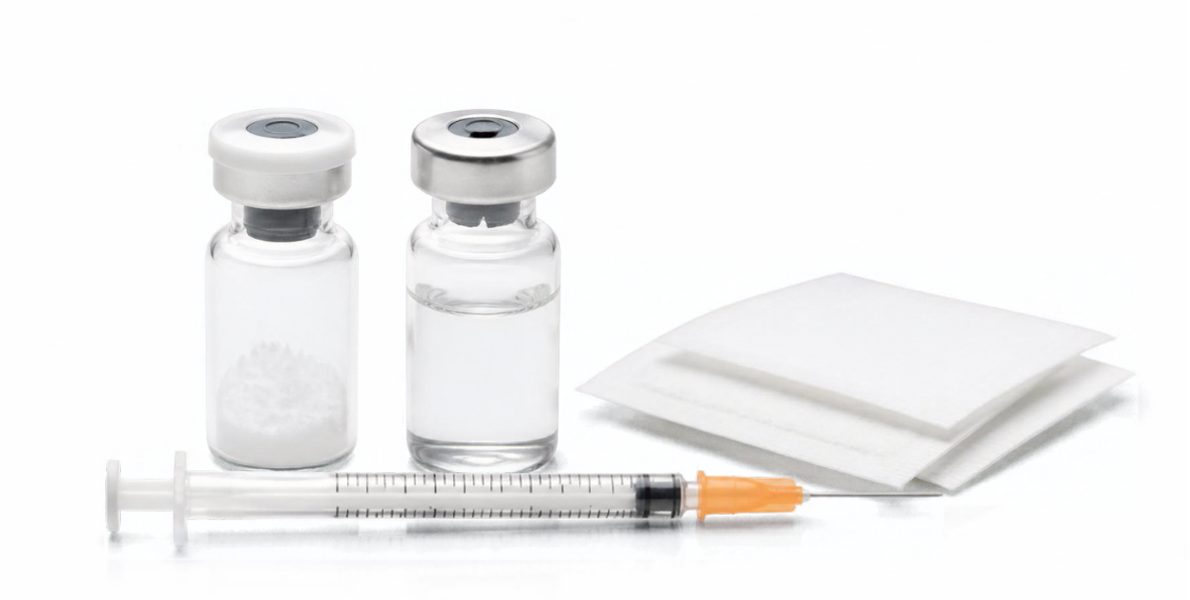
In order to reconstitute lyophilized BPC-157 powder for research purposes, it is necessary to gather the following supplies: the vial of the peptide, bacteriostatic water (which is sterile water containing 0.9% benzyl alcohol), alcohol swabs, and suitable syringes. In research settings, insulin syringes with markings indicating 100 units are usually preferred because they allow for precise small volume measurements.
Generally, the storage of a reconstituted material involves refrigeration at temperatures within the 2 to 8 degree Celsius range. Reconstituted peptide solutions are typically used in a few weeks’ time in laboratories, though no formal stability data regarding commercial BPC-157 products in a reconstituted state exist.
Step-by-Step Concentration Math
The maths is indeed straightforward. Just divide the amount of peptide by the amount of water that has been added. So one gets 2500 μg/mL of peptide from a 5-mg vial in 2 ml of bacteriostatic water. A 10-mg vial in 2 ml gives 5000 μg/mL. Our reconstitution calculator does these calculations for you automatically and converts the output into units useful for insulin syringes.
- Check the vial label Confirm the total peptide content in milligrams (e.g., 5 mg).
- Draw bacteriostatic water Pull the desired volume into a syringe (e.g., 2 mL). Common volumes are 1 mL or 2 mL.
- Inject water into the vial Direct the stream against the glass wall, not directly onto the powder cake. Let it dissolve without shaking.
- Calculate concentration Divide total mcg by total mL. Example: 5000 mcg / 2 mL = 2500 mcg/mL.
- Determine volume per target amount Divide target mcg by concentration. Example: 250 mcg / 2500 mcg/mL = 0.1 mL = 10 units on an insulin syringe.
- Store refrigerated Keep the reconstituted vial at 2-8 degrees Celsius. Avoid freezing the reconstituted solution.
Common Misconceptions Beginners Encounter
Forum Protocols Are Not Clinical Protocols
Various online communities have created detailed protocols for drug dosage indicating the microgram amounts for the drug to be injected, injection frequency and length of the entire cycle. These are personal protocols of members of the online communities obtained from them through sharing their experience and making amendments based on their experiences. However, what we found out was that the dose numbers that are usually repeated among people go in line with the dosages mentioned in several studies on rats, listed above.
Community knowledge is valuable in its own right, yet it does not substitute for clinical evidence. The distinction is important, given that clinical protocols specify monitoring of safety, criteria for modifying dose, and stopping rules, while forum protocols do not.
More Is Not Necessarily Better - No Dose-Response in Humans
Some of the rat studies tested both 10 mcg/kg and 10 ng/kg and found effects at both levels, with the lower dose sometimes producing comparable results. Cerovecki et al. (2010) reported beneficial effects on ligament healing at both the microgram and nanogram doses (PMID 20225319). This is an unusual finding that has not been fully explained, and it argues against the assumption that higher doses automatically produce better outcomes.
FAQ - BPC-157 Beginner
What is BPC-157?
BPC-157 (which stands for Body Protective Compound-157) is a manufactured pentadecapeptide, which contains 15 various amino acids. The sequence is taken from part of a protein commonly present in the human gastric juice. The history of this peptide goes back to the initial characterization of the compound made by Sikiric and colleagues at the University of Zagreb. The peptide has been tested in terms of tissue injury, inflammation, and damage in the gastrointestinal tract in various animal models, with the earliest publications appearing in accredited journals in the early 90s (PMID 29879879).
Is there a recommended starting dose?
No, there is currently no clinically established minimum dosage for BPC-157 in humans. Neither regulatory body has approved BPC-157 for use in humans nor has any research published about a dosage-finding study of BPC-157 for human-based tests. All of the numbers that are proposed online as "minimum doses" are only taken from experimental data of animals where allometric scaling has taken place as a mathematical exercise which also does not qualify as any kind of clinical recommendation.
Where do the dose numbers on forums come from?
The studies referenced herein originated from published research studies conducted on rats in which the dosage of the peptide given was 10 mcg/kg body weight, mostly via intraperitoneal injection. Users of these forums indicated that the FDA allometric scaling factor is used whereby 10 mcg is divided by 6.2 to derive an equivalent human dosage of 1.6 mcg. This is then multiplied by a given body weight. Other doses of 250 and 500 mcg, apparently coming from this ratio, seem to have been rounded numbers used by the companies selling the peptides.
Should I talk to a doctor first?
Indeed. Not all substances that undergo human testing are safe. A doctor can take into consideration health specifics, combinations of medications, and contraindications, the likes of which could not be found in any online resources. Those who meet BPC-157 through research studies should consult with a qualified doctor.
BPC-157 is legal for laboratory research only and is not approved for human use. Consult your physician regarding the use of BPC-157. As there are no clinical trials with BPC-157 providing proof of safety or efficacy.
Compare the current picks
Prices, sizes and ratings side by side, updated when the merchant pages change.
Compare sources